First Shopify AI generated content for merchant products at scale
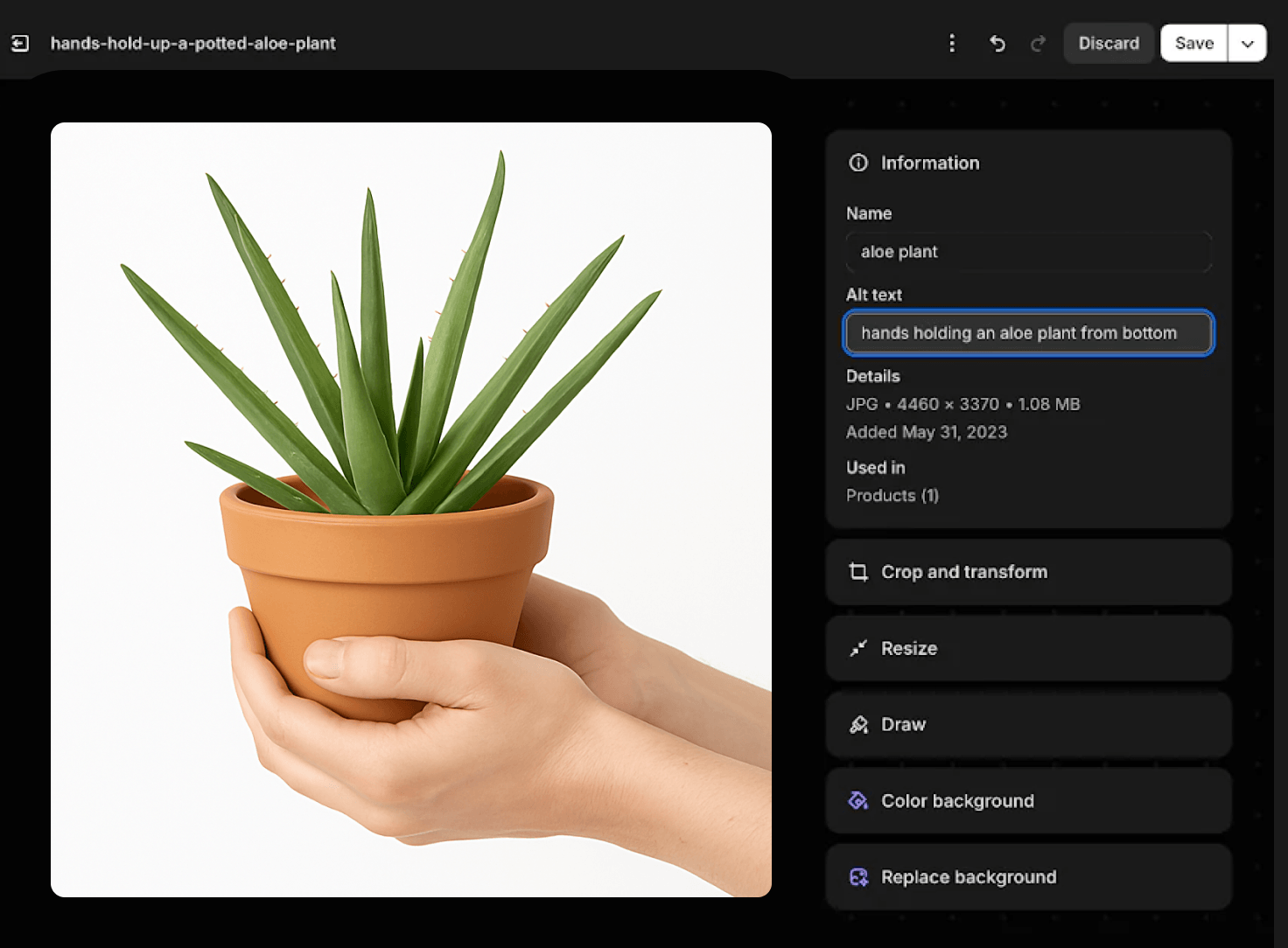
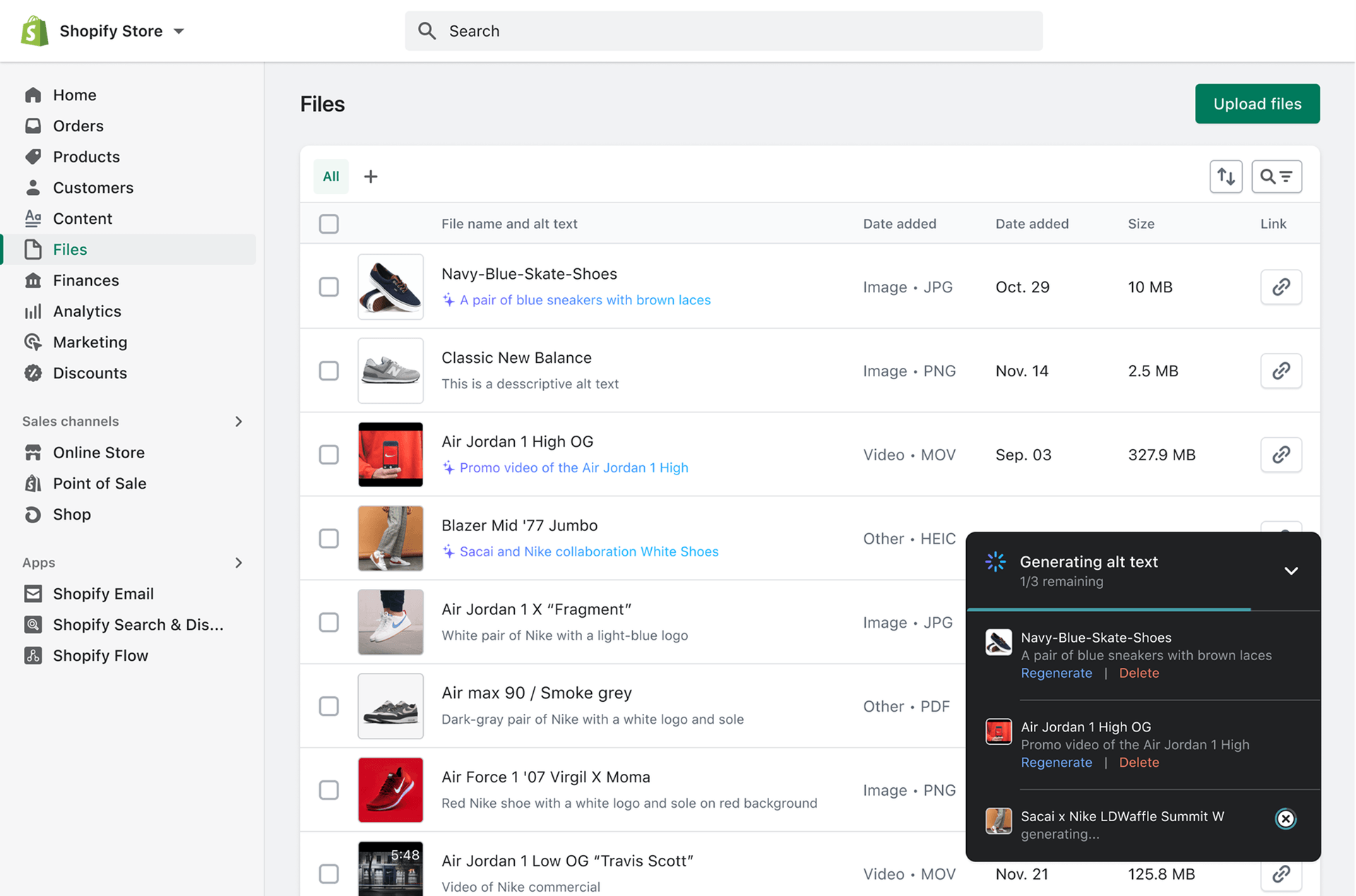
I led the design of image alt text generation in Shopify admin, giving merchants control to review, edit or regenerate suggestions.
- SaaS
- Accessibility
- GenAI
- E-commerce
Project overview
Overview
Strong photos, empty alt text
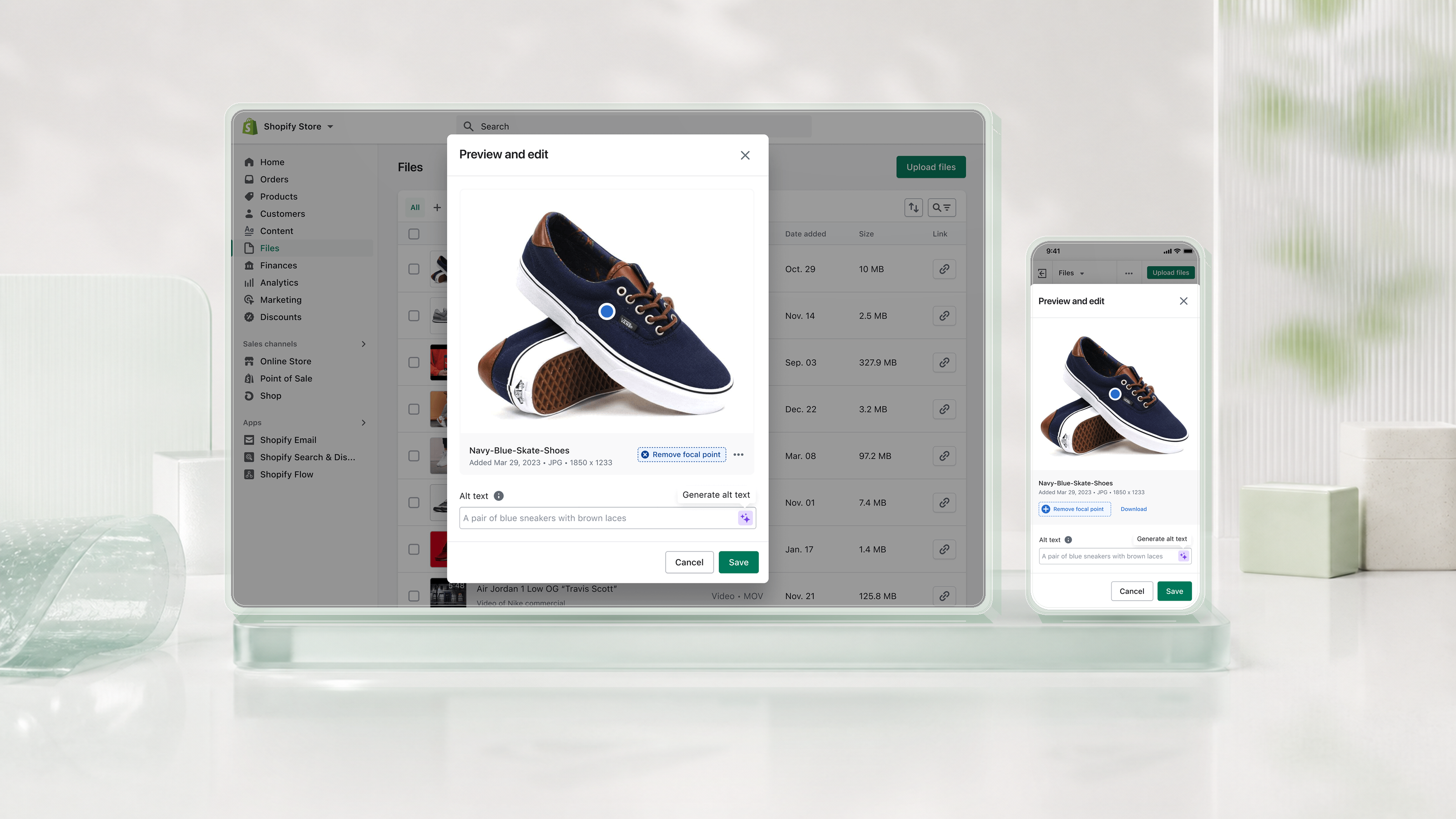
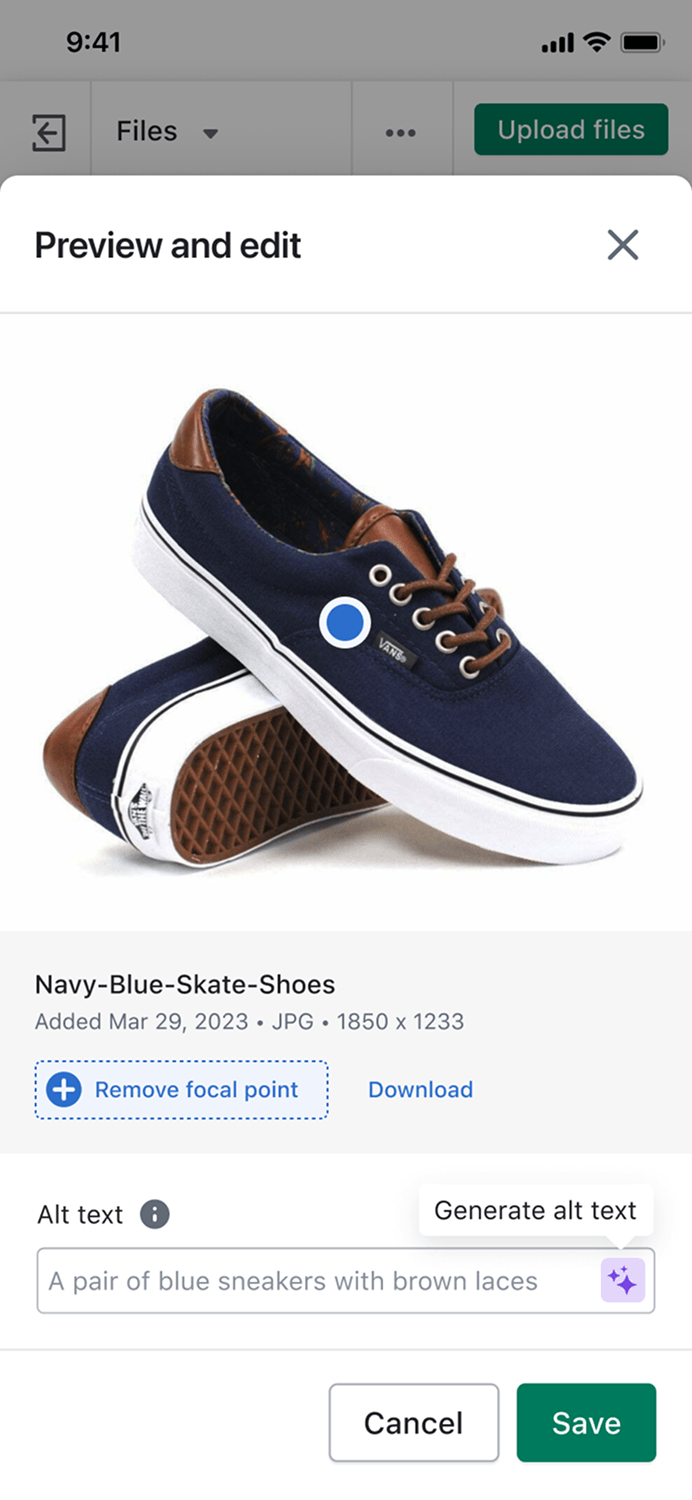
Editable AI-generated alt text in Shopify admin, with merchant review across desktop and mobile.
Role
Product Design Lead
Product direction, media editing flows, model quality review and accessible editing controls.
Team: Tech lead, PM, UX researcher, content designer
Problem
Product images lacked descriptions
Product media and Content → Files left merchants to write descriptions for each image. The project research recorded low metadata coverage across the catalog.Solution
Editable alt text at upload
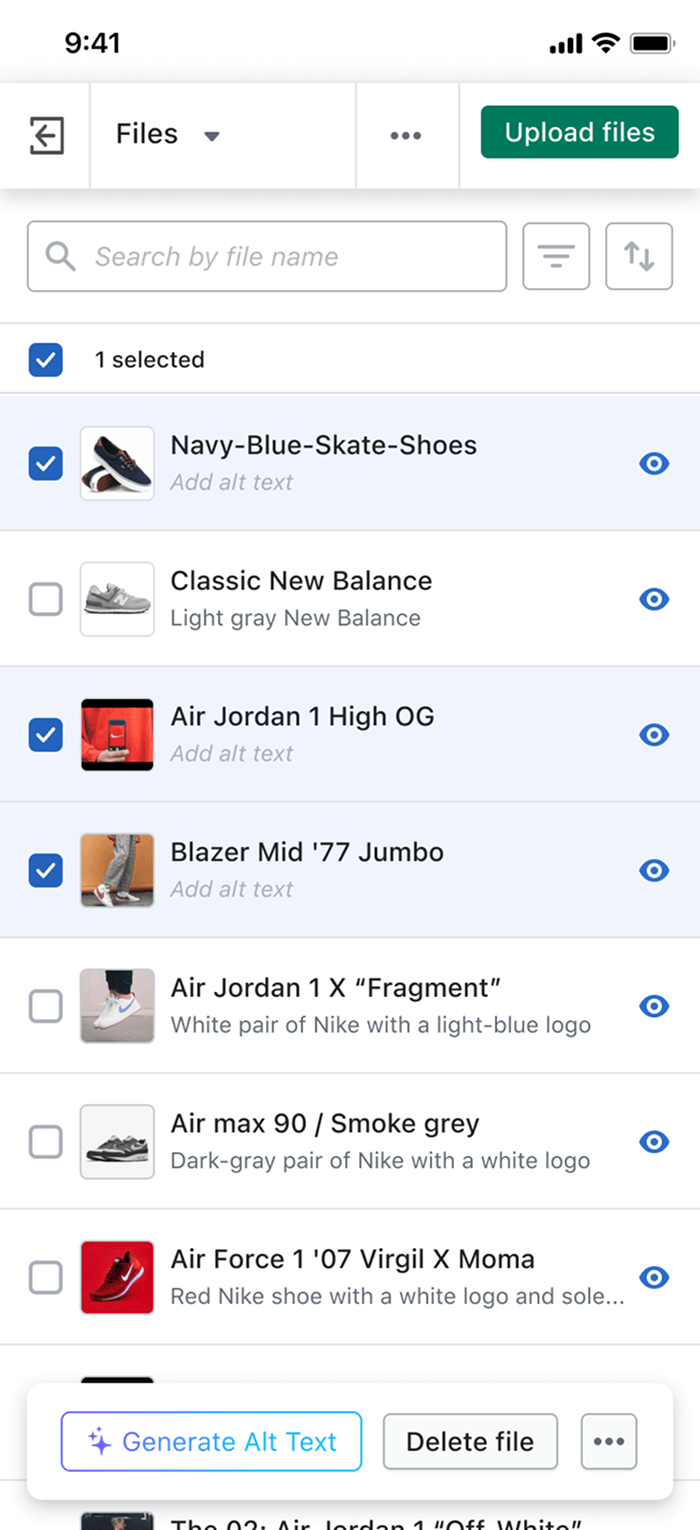
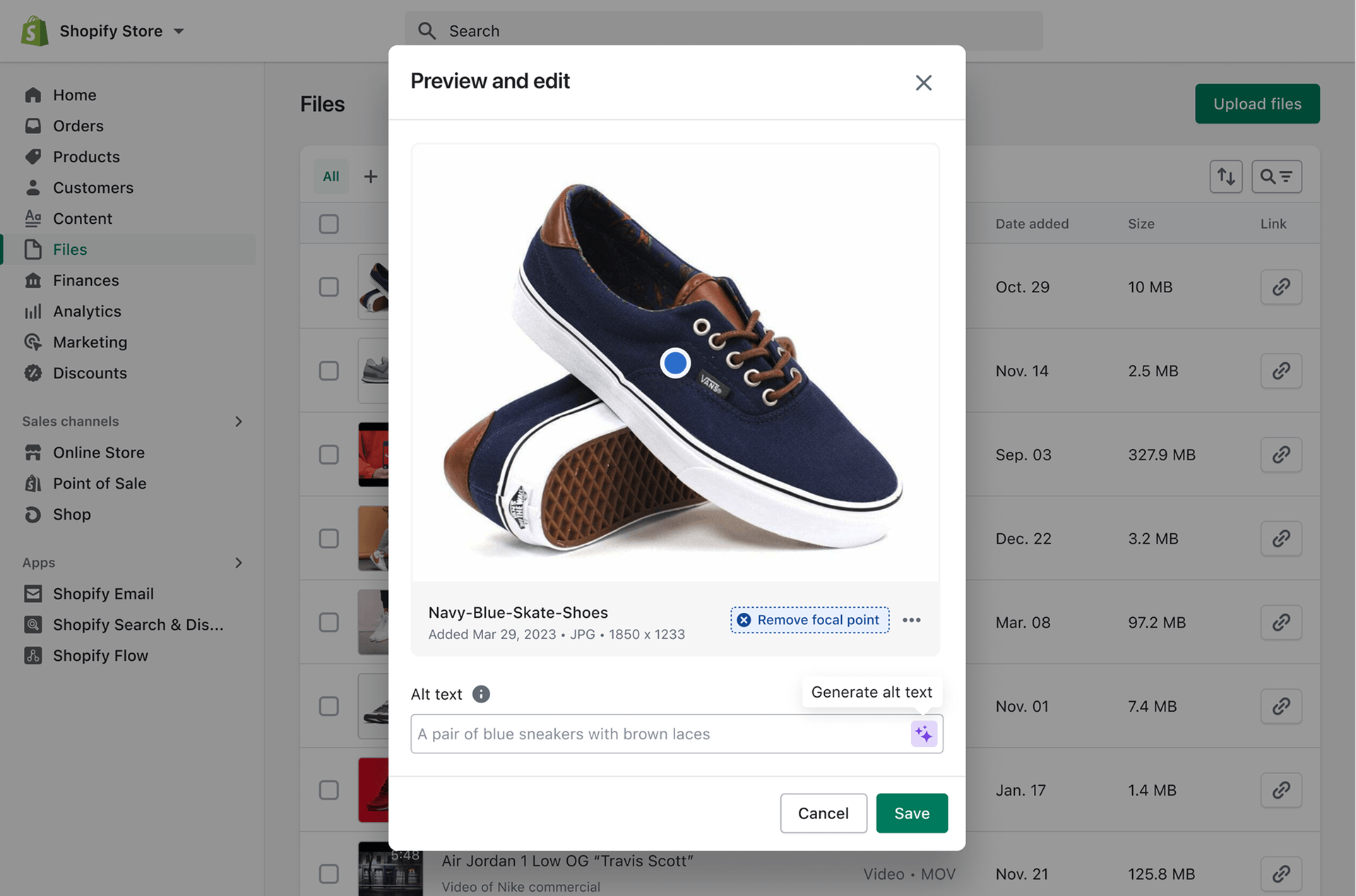
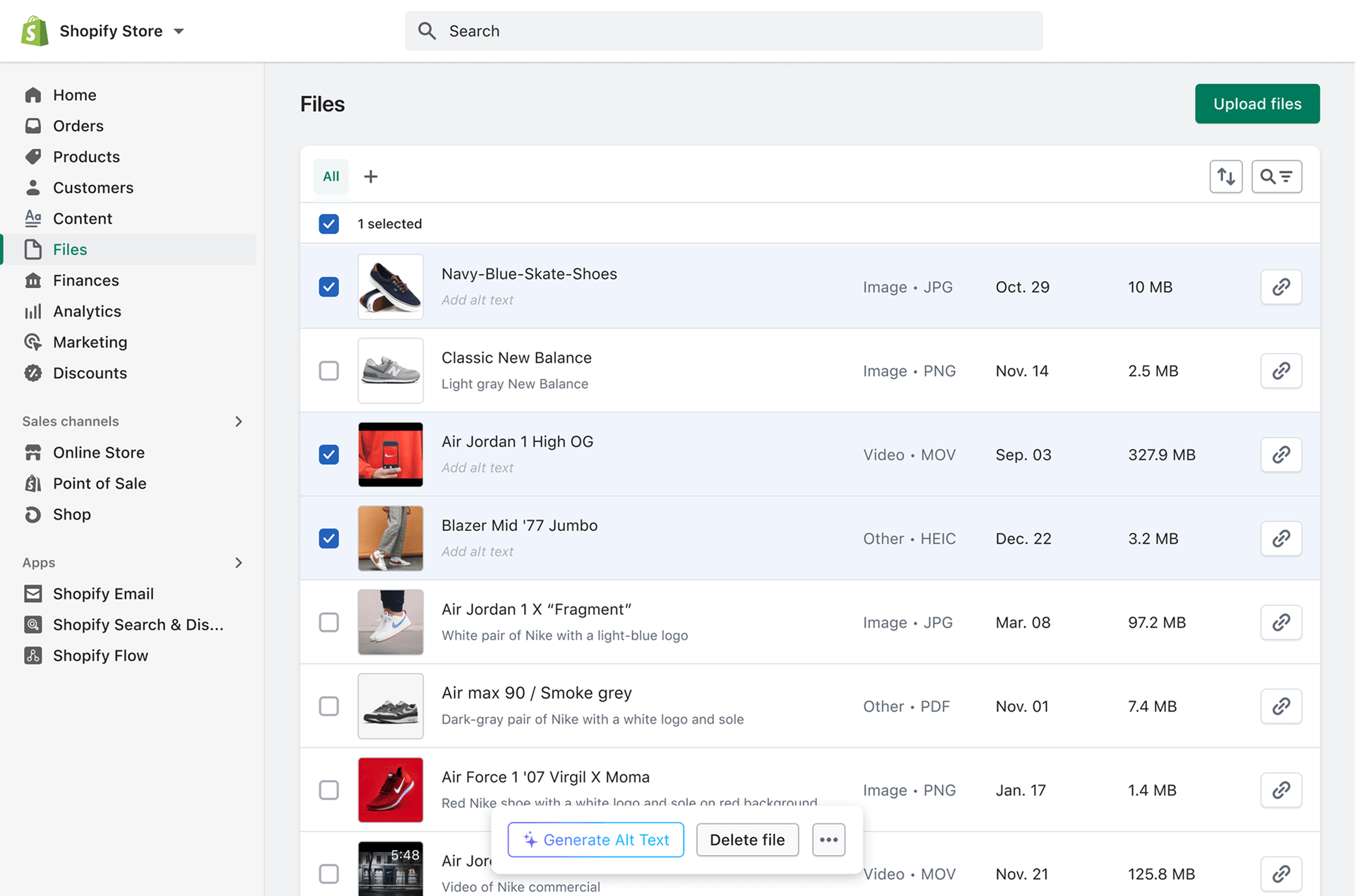
Generate alt text during upload and batch editing, with merchant review before saving.
From education to generation at upload
Missing metadata affected access and discovery
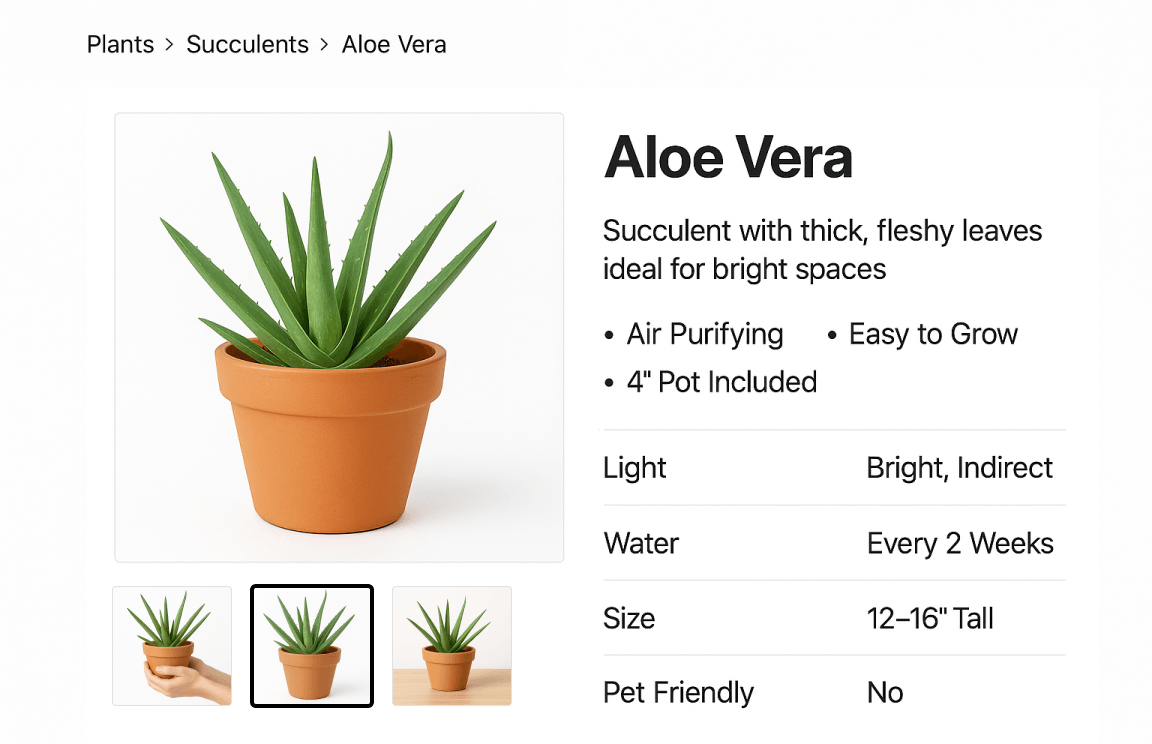
Research, design and model evaluation
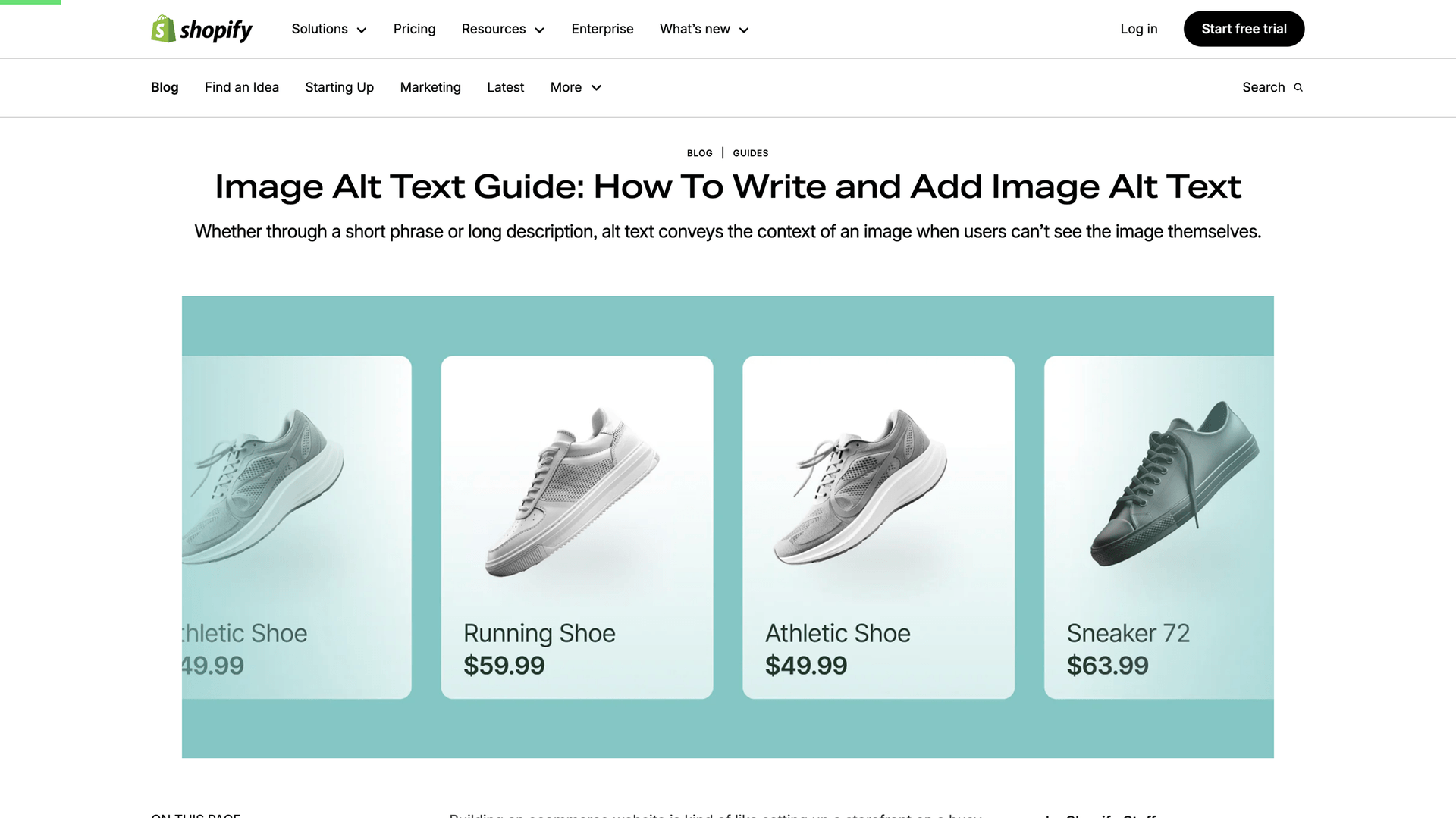
Writing guidance did not improve coverage
Time was the main barrier
Batch generation in Files
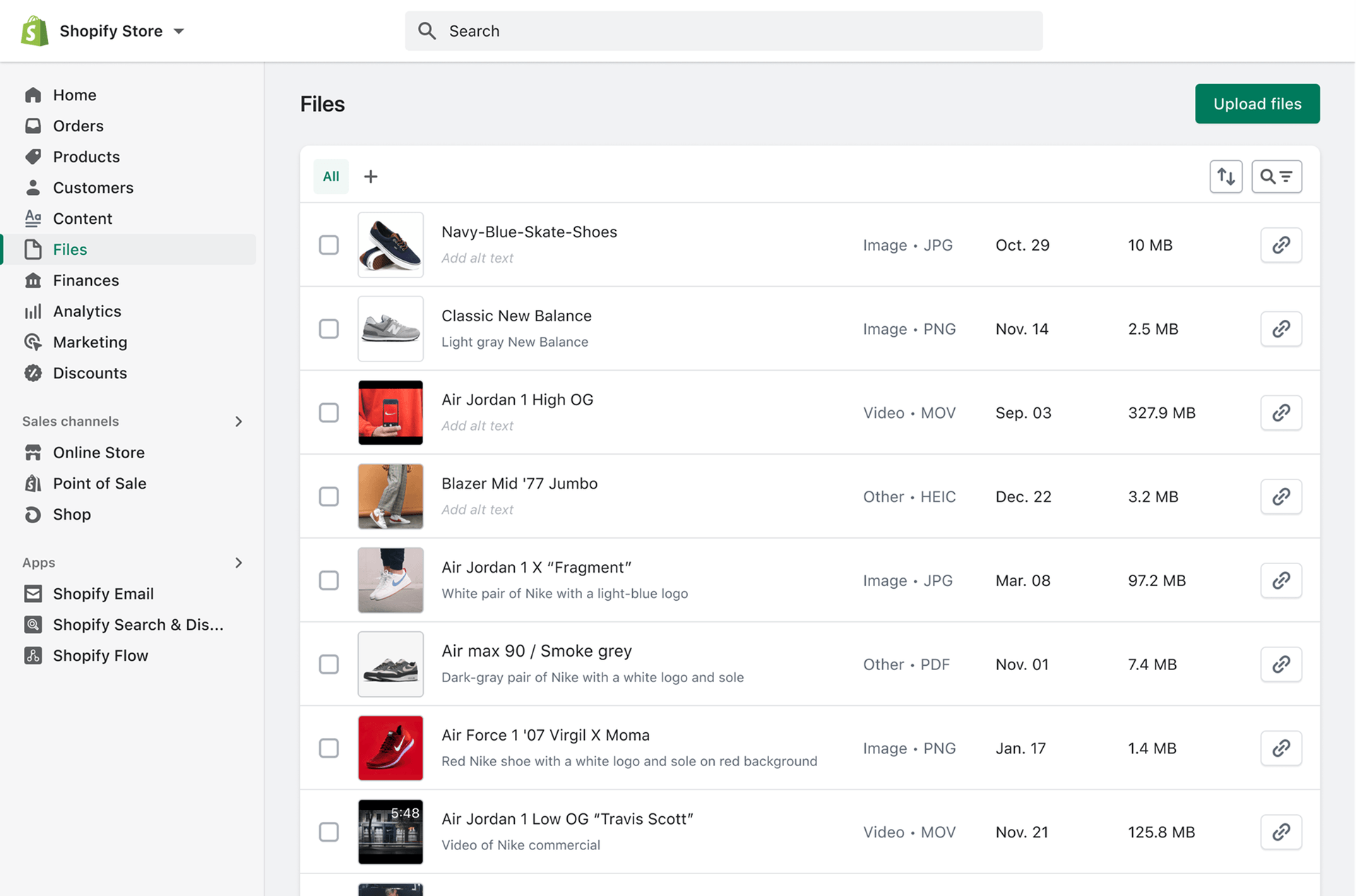
01. Files, mostly empty
Batch generation on mobile


Generate at upload, keep the merchant in control


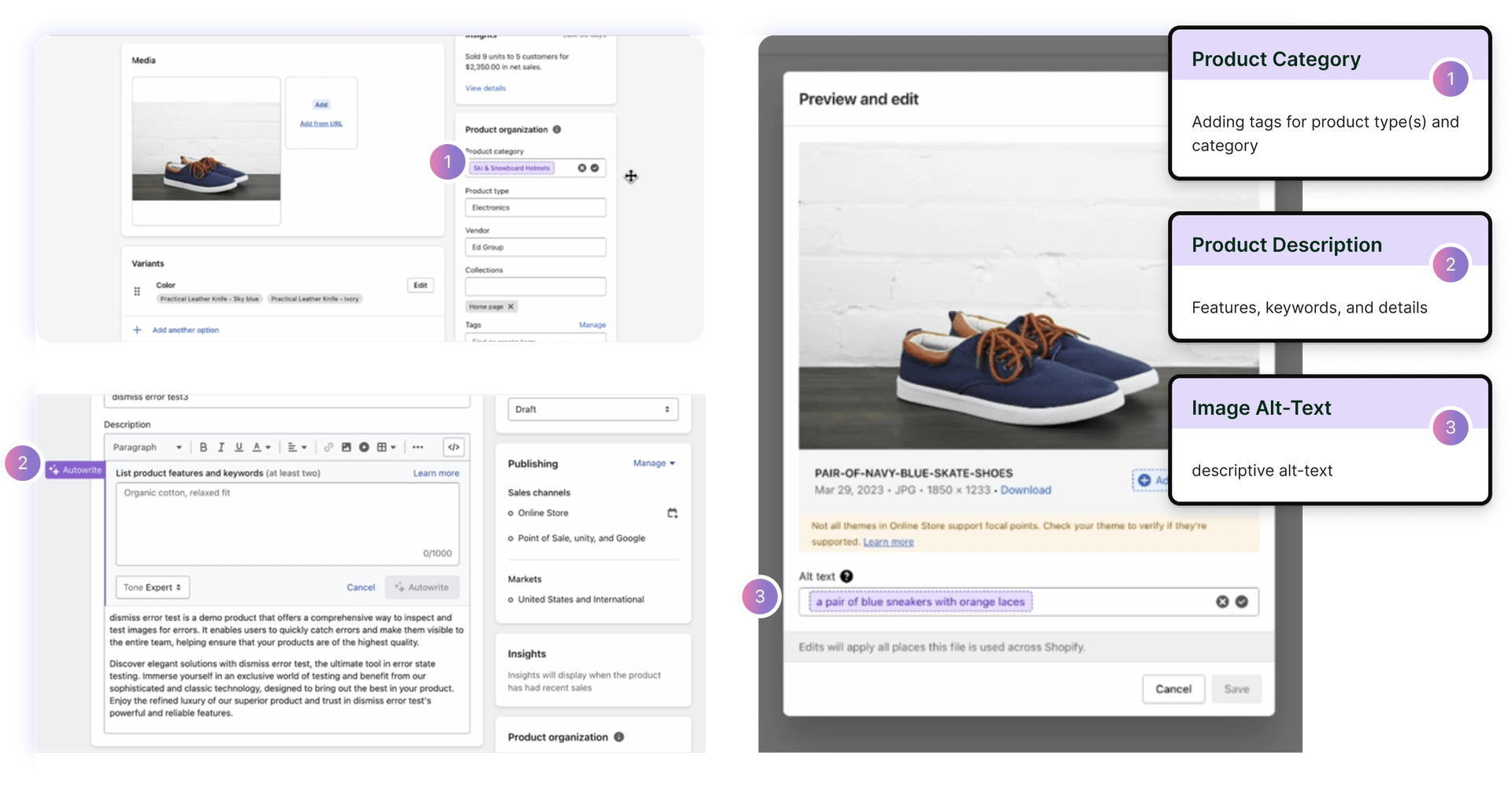
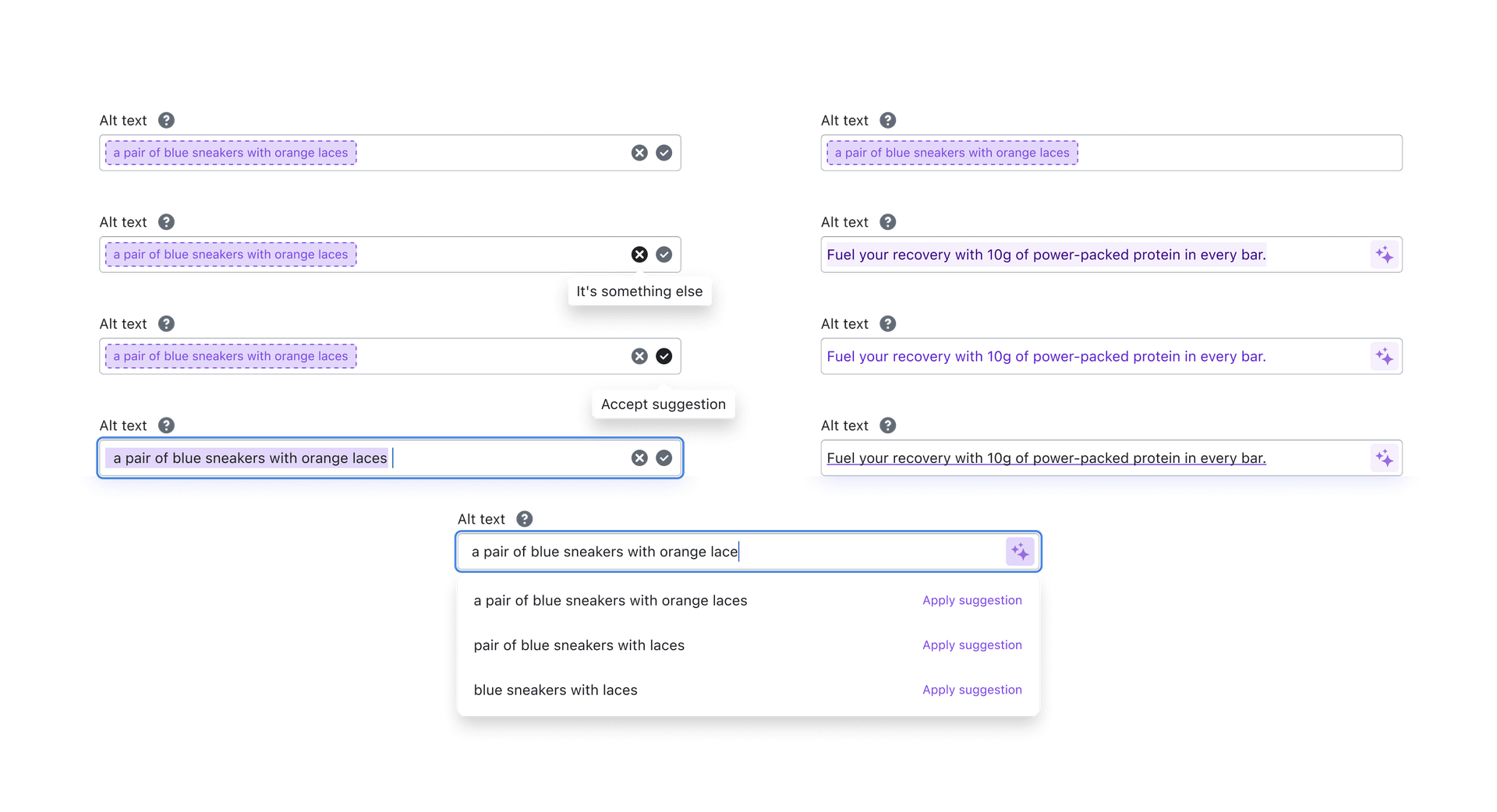
We evaluated roughly a dozen models on merchant uploads and tested the editing flow with Enterprise customers. Inaccurate descriptions can mislead screen-reader users2, so generated text remained editable and required merchant review before saving.
Reported rollout results
Recommendations

 Shopify
One of the most impressive things about Tidjane is his ability to balance strict product requirements with unbound creativity. He recently worked on the integration of LLM into alt-text for images, a project that demonstrated his skills in both design for AI and good understanding of the back-end powering the experience. In addition to his technical expertise, Tidjane is a great team player – he's level-headed and knows when to step in to help unblock the project. Overall, it's been a pleasure to have him on the team and I look forward to a chance to work with him again.
 Alëna Iouguina on LinkedInDirector, Experience Design @AutodeskShopify
It was a pleasure to work alongside Tidjane, particularly in our collaborative efforts to streamline UX designs for file management within Shopify. Tidjane has demonstrated a unique ability to simultaneously manage tight deadlines while maintaining a sharp sense of design.
Tidjane's proficiency in crafting user-centric interfaces, which are both intuitive and visually engaging, sets them apart in the field. His clear grasp of user-focused design principles has led to the development of cohesive and understandable interfaces, enhancing our overall user experience.
I confidently endorse Tidjane's exceptional UX design skills, leadership and adept time management. His combination of creativity, effectiveness, and a profound understanding of user experience would make him an invaluable asset to any team.
 Alex Massaad on LinkedInCTO at Victoria Garland. I build the custom Shopify apps that “off-the-shelf” solutions can’t replace.Shopify
I worked with Tidjane for over a year as his manager on the Content Experiences team at Shopify. In that time, I observed him to be a careful and systematic designer, who is a calm and stabilizing force in the face of uncertainty and quickly changing circumstances. He’s also confident when working on the types of “iceberg” experience problems, where most of the challenge is not visible in the final UI, but essential to the UX none-the-less.
 Theresa Paul on LinkedInUX Lead @ ShopifyShopify
I had the pleasure to work with Tidjane on the same team at Shopify; Digital Assets, over the past year. My first observation was how seasoned and calm he is facing complex problems, and technical constraints. Tidjane and I used to have several pairing sessions where we brainstormed solutions, ideas, and feedback. Loved the way he shares feedback in a very constructive fashion, yet challenging approach to uncover any hidden opportunities. Being as crafty as he was, discussing intricate details and even hypothetical concepts with him was very easy due to his ability to visualize and see the end vision we're aiming for, a rare skill that I haven't seen in many designer, and when it does exist, it makes those pairing sessions WAY more productive and fluid. Will be gladly looking forward to cross paths again.
 Osama Ghazal on LinkedInShopify & Broadcom Alumni
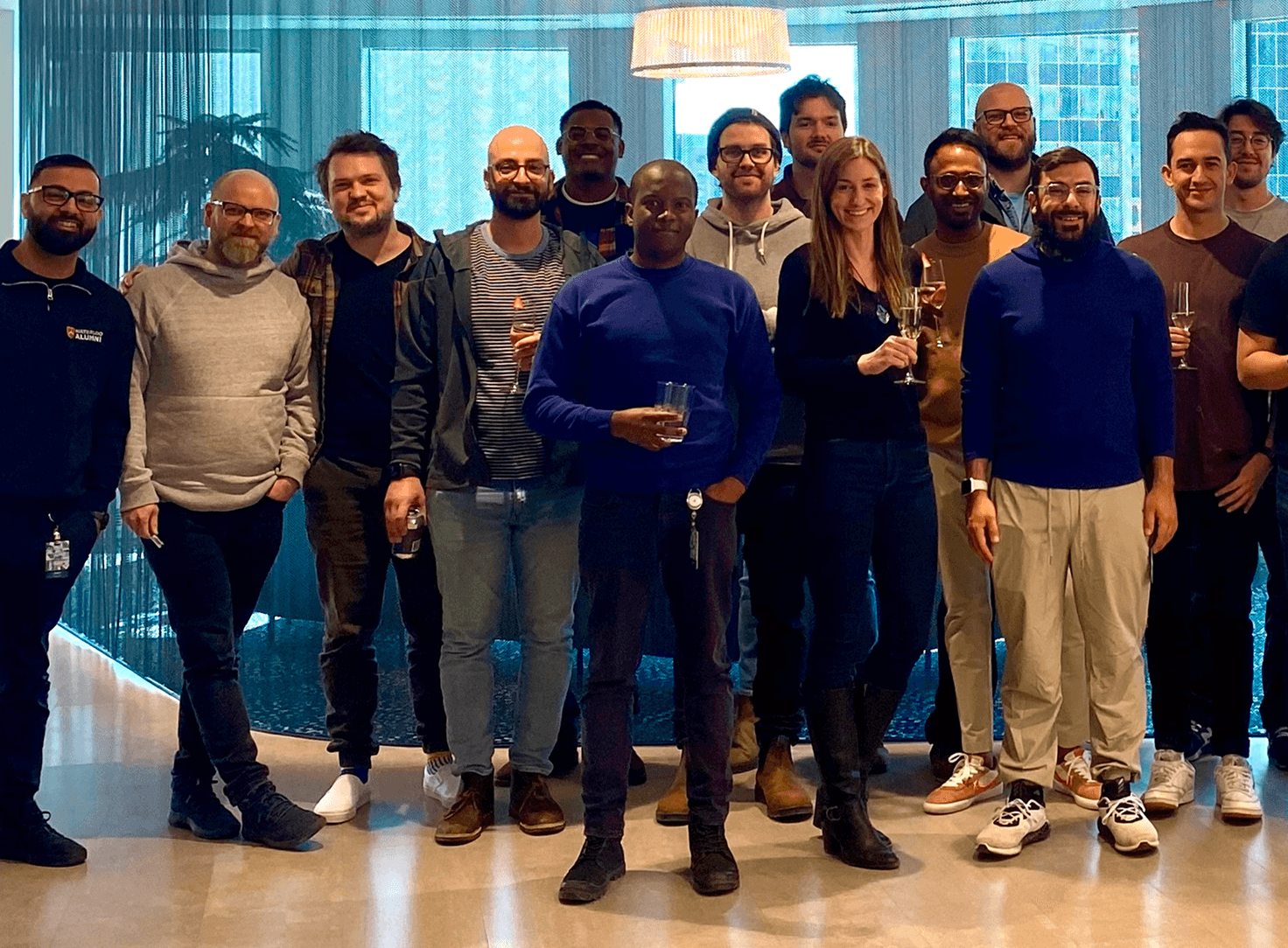
Shipped with
Tech lead
Image pipeline, generation queue, and mobile parity
Product manager
Rollout sequencing and the exec narrative
UX researcher
Merchant interviews, surveys and segment analysis
Content designer
Education artifacts and in-product copy
Sources and notes
3 references- NoteAuthor’s original Shopify research summary: interviews and surveys with 50 merchants, plus platform analysis. Percentages describe the project’s reported findings, not all Shopify merchants.
- webaim.orgWebAIM holds alt text to a strict accuracy bar: it must be an equivalent for the image, since a wrong description still reads as fact to a screen reader.
- NoteAuthor-reported results from the original Shopify project presentation: metadata coverage increased from 15% to 95%, manual-entry time fell by 80%, and rollout reached 2M+ merchants. The source does not specify a measurement window or survey methodology; coverage is not itself an accessibility-conformance score.